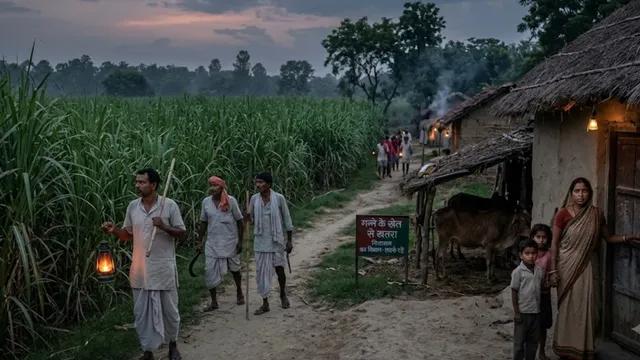
लखीमपुर जिले के ग्रामीण इलाकों में इन दिनों एक गंभीर और चिंताजनक स्थिति उत्पन्न हो गई है। स्थानीय लोगों के जीवन और आजीविका का मुख्य साधन माने जाने वाले गन्ने के खेत अब उनके लिए जानलेवा साबित हो रहे हैं। हालिया रिपोर्टों के अनुसार, लखीमपुर के लगभग दो दर्जन गांवों में बाघ और तेंदुओं की सक्रिय उपस्थिति ने दहशत का माहौल पैदा कर दिया है। कृषि भूमि, जो कभी किसानों के लिए आर्थिक सुरक्षा का प्रतीक हुआ करती थी, अब इन जंगली जानवरों के लिए एक सुरक्षित आश्रय स्थल में तब्दील हो चुकी है। इस अप्रत्याशित और खतरनाक स्थिति ने स्थानीय प्रशासन और आम जनता दोनों को गहरी चिंता में डाल दिया है, क्योंकि लोग अब अपने ही खेतों में काम करने जाने से डर रहे हैं। The situation has escalated to a point where daily agricultural activities have been severely disrupted. Farmers, who depend heavily on the cultivation of sugarcane for their livelihood, are finding it increasingly difficult to tend to their crops. The dense foliage of the sugarcane fields provides an ideal cover for predators like tigers and leopards, making it nearly impossible for workers to spot them before it is too late. As a result, there has been a noticeable decline in the daily turnout of agricultural laborers. Many have chosen to stay back in their homes, prioritizing personal safety over economic gain. This sudden halt in farming operations not only threatens the current season's yield but also poses a long-term risk to the local economy, which is predominantly agrarian. Wildlife experts and local authorities suggest that the expansion of agricultural land into natural habitats might be a contributing factor to this crisis. The encroachment of forests and the subsequent reduction in the natural prey base of these big cats could be forcing them to venture into human-dominated landscapes in search of food. In the affected villages, instances of livestock predation have also been reported, further aggravating the financial losses of the farming community. The psychological impact on the residents cannot be understated; the constant fear of a sudden attack has led to a state of anxiety and trauma, particularly among women and children who are often left alone in the villages during the day. In response to the growing panic, the district administration has initiated preliminary measures to assess the extent of the threat. Local officials have been deployed to patrol the vulnerable areas and to gather firsthand accounts from the affected villagers. While concrete mitigation strategies are still under formulation, there is an urgent need for immediate intervention. The deployment of forest department personnel and the installation of temporary surveillance systems are being considered to monitor the movement of these wild animals. However, the effectiveness of such measures remains to be seen, as the vast geographical spread of the affected region presents significant logistical challenges for the authorities. Community leaders and social workers have stepped forward to bridge the gap between the administration and the frightened populace. They are actively organizing awareness campaigns to educate the villagers on safety protocols when stepping out of their residences. Simple precautions, such as traveling in groups, avoiding early morning or late evening outings, and making noise while moving through the fields, are being strongly advised. Despite these efforts, the trust of the local population in the safety of their immediate environment has been severely eroded. The demand for a permanent and robust solution, including the possible relocation of the wild animals or the creation of physical barriers, is growing louder with each passing day. Ultimately, the crisis in these two dozen villages of Lakhimpur highlights a complex intersection of human survival and wildlife conservation. It underscores the urgent need for a comprehensive and sustainable approach that addresses both the safety of the local residents and the ecological balance of the region. Until a permanent resolution is achieved, the residents will continue to live under the shadow of fear, with their once-productive sugarcane fields remaining a perilous zone. The coming days will be critical in determining how effectively the authorities can manage this escalating human-wildlife conflict and restore a sense of security among the affected communities.
लखीमपुर के दो दर्जन गांवों में बाघ और तेंदुए का खौफ: रोजी-रोटी का साधन बने गन्ने के खेत हुए जानलेवा

Share this story